Introduction
Material selection plays a crucial role in defining both the appearance and performance of a product. In packaging production, even a small difference in label material can significantly affect how a product looks on the shelf.
For example, a transparent label applied to a colored product may reduce contrast and make important design elements less visible. Similarly, using a rigid material on flexible packaging can lead to wrinkling or poor adhesion during use.
These differences may seem minor at first, but they can directly impact brand perception, product presentation, and overall user experience.
One of the most widely used materials is polypropylene (PP), known for its durability, flexibility, and versatility. However, PP is not a one-size-fits-all solution. There are several variations available, each offering unique visual effects and functional benefits. To see how these materials are applied across different label formats, you can explore our label type overview.
Understanding these differences helps ensure that the selected material not only looks appealing but also performs reliably across real production and usage conditions.
1. PP White
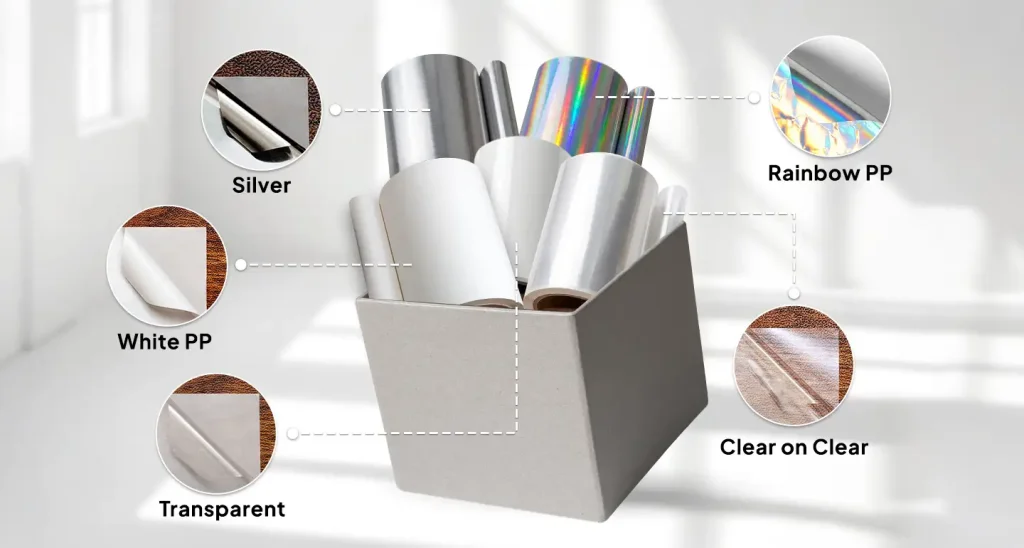
PP White is one of the most commonly used types of polypropylene, featuring a solid white surface that provides an excellent base for printing.
This material is ideal for designs that require high color opacity and strong contrast. Colors printed on white PP appear more vibrant and consistent, making it suitable for branding that relies on bold visuals and clear readability.
Because of its stable and opaque surface, PP White is often the preferred choice when color accuracy and consistency across production batches are critical. It is widely used in pressure sensitive labels, where print consistency across large volumes is essential.
2. PP Transparent
PP Transparent offers a clear, see-through appearance that allows the product inside to remain visible, creating a clean and minimalistic look often associated with modern and premium designs.
However, the final visual result is highly influenced by the product inside the packaging. For example, applying a transparent label to a product with a strong color (such as yellow or dark liquid) can alter how the printed design appears, sometimes reducing contrast and readability.
To achieve optimal results, design elements must be carefully planned, and in some cases, additional layers such as white ink may be required to maintain clarity. Pairing transparent material with the right embellishment technique can also help improve visibility and overall label quality.
3. PP Rainbow
PP Rainbow is a specialty material that produces a holographic or iridescent effect. When exposed to light, it reflects multiple colors, creating a dynamic and eye-catching appearance.
This type of PP is commonly used for promotional packaging, limited edition products, or brands that want to stand out on the shelf.
However, due to its strong visual effect, it can also affect how printed colors appear. Designs that are too complex or heavily detailed may compete with the material’s reflective surface, making the overall look appear less clear.
For best results, PP Rainbow is typically paired with simpler design elements to maintain balance and readability. Adding techniques such as foil stamping or selective varnish can further enhance the visual impact without overwhelming the design.
4. PP Silver
PP Silver features a metallic finish that gives packaging a premium and sophisticated appearance. It reflects light in a subtle way, enhancing the overall visual appeal without being overly flashy.
This material works well with minimalist designs, as the metallic background itself adds depth and elegance.
However, the metallic surface can influence how colors are printed. For example, certain colors may appear darker or slightly shifted compared to how they look on standard white material.
Because of this, design adjustments are often required to achieve the intended visual result. Combining PP Silver with embossing or debossing is a common approach to reinforce the premium feel of the final label.
5. Clear on Clear
Clear on Clear is designed to create a seamless, “invisible label” effect, where both the material and adhesive are transparent, allowing the label to blend perfectly with the packaging surface.
This type is ideal for brands that want a clean and sophisticated presentation, especially for glass bottles, jars, and premium products.
However, achieving this effect requires careful design planning. Without sufficient contrast, important information such as product details or branding elements may become difficult to read.
In some cases, additional design techniques—such as selective white ink or bold typography—are needed to maintain visibility while preserving the transparent aesthetic. You can also consider varnish options to add a protective layer that preserves the label’s appearance over time.
How to Choose the Right PP Material
Selecting the right PP material depends on several factors, including product type, packaging structure, branding strategy, and desired visual impact.
For example:
- PP White is ideal for strong, consistent color output and high readability.
- PP Transparent works best for achieving a “no-label look,” especially on clear packaging.
- PP Silver is suitable for premium designs that benefit from a metallic finish.
- PP Rainbow is effective for eye-catching, promotional, or limited-edition packaging.
- Clear on Clear is best for seamless and minimalist presentation, with careful attention to contrast.
In addition to visual considerations, it is also important to evaluate how the material performs under real conditions, including handling, storage, and environmental exposure. You can view real examples of how these materials perform across various industries in our portfolio.
Choosing the right material is not only about appearance—it is about ensuring consistent performance throughout the product’s lifecycle.
Conclusion
PP materials offer a wide range of possibilities for packaging design, from simple and functional to bold and premium. Each type—White, Transparent, Rainbow, Silver, and Clear on Clear—serves a different purpose and creates a unique visual effect.
However, material selection should not be based on appearance alone. In label production, it is also a performance decision that affects durability, readability, and overall product presentation.
By aligning material choice with both design goals and real-world application requirements, businesses can create packaging that is not only visually compelling but also reliable and effective.
If you’re exploring the best PP material for your product, our team is ready to assist with recommendations tailored to your specific packaging and production needs.
📱 WhatsApp: https://wa.me/62811949769
📧 Email: [email protected]